
Ah, creativity. If only we could be more creative… As it turns out, a pen and paper will help with that. Handwriting has numerous benefits, not only for writers, but for everyone.
Yes, writing by hand is slower than typing, and less productive. And you can’t search a physical notebook by clicking on a search icon. (You can. More on that in a moment.)
If your creativity has vanished…
I rediscovered the benefits of handwriting when I hit an unproductive phase. Writing became a slog. So, I went back to basics. For me, that’s journaling and mind mapping.
Why am I so uninspired? I journaled.
Then I found myself writing: “Sufficient unto the day is the evil thereof.”
That line is part of Matthew 6:34—“Take therefore no thought for the morrow, for the morrow shall take thought for the things of itself. Sufficient unto the day is the evil thereof.”
I realized that I put too much pressure on myself, worrying about everything. The constant worry killed my creativity.
Handwriting helped. Writing by hand slows you down and helps you to focus.
Let’s look at other benefits writing by hand gives you.

1. Inspiration: your hand stimulates your brain
Neuroscience suggests that hand movements stimulate various regions of your brain.
That makes sense. I’m a fan of acupressure; a form of acupuncture without needles. It relieves my habitual stress headaches. Today, if I feel a headache simmering, I massage my hands: primarily the web of skin (interdigital fold) between my thumb and forefinger. That clears the headachy feeling.
When stuck for inspiration, or if you find yourself procrastinating, use a pen and paper. Write anything you choose—what matters is the pen and the movement of your hand.
2. Clears brain fog and develops focus
Why does brain fog develop at those times you want to be sharp?
Try this. Grab a pencil and write for five minutes.
Or try mind mapping, or doodling.
Something else to try: rosemary or lemon myrtle essential oil. Dab a few drops onto a tissue or handkerchief and sniff to clear your mind.
3. It helps you to retain information and learn
If you’re studying, try writing your notes into a notebook. Handwriting takes time, and helps you to remember information. Create (hand-drawn) mind maps for material you must remember. A mind map gives you an overview you can take in at a glance.
Have you discovered the Cornell Notes system? I use it for research. You divide a sheet of paper into three; the act of summarizing information helps you to remember it.
You may be wondering: in these days of AI, why would you use such an antiquated system? Quick answer: it helps you to remember, and your creativity depends on your memory.
4. Improves your moods
Moods come and go.
If you’re feeling stressed, try journaling for 15 minutes.
Start by describing your mood in a phrase: “everything is too much effort; I can’t be bothered.”
Set a timer and write. Write anything at all; complain on paper for 15 minutes if you like. (If you give yourself permission to complain, you’ll soon get bored with it.)
At the end of 15 minutes, it’s likely that your mood has shifted. You may write: “I feel more energetic now.”
5. Leads to more writing (without stress)
Writing (by hand) primes the writing pump.
If I set a timer for five minutes, and journal, my mood’s changed. A project I’ve dreaded or which seemed challenging, suddenly looks easier and more interesting: curiosity helps to conquer fear.
6. Helps you to manage habits: you’ll be less inclined to procrastinate
Are you addicted to dopamine?
Avoid doom scrolling and checking messages ten times a day. Turn your phone off. Bad habits do more than waste time, they steal opportunities.
Grab a sticky note and make a list of five things you want to accomplish today. When you feel like opening Instagram to relax just for a minute, journal instead.
7. Improves your problem-solving skills
Got a problem? Grab some paper and describe it. (You can always burn the sheet if the problem’s confidential.)
When you explain a challenge to yourself, you’ll usually come up with a solution—but don’t accept the first solution that comes to mind. Write about the solution, and you’ll come up with a better one.
Did you know that you can convert notebook pages into text?
A friend was hesitant about keeping a notebook. She complained: “I won’t be able to find anything. I’ll be leafing through pages forever. My clients will be upset, and I’ll get fired.”
There are apps to help. One example: HandwritingOCR converts your notes to text.
If you’re an Evernote user, try its AI Transcribe feature. Simply upload images of your notebook pages, or scan the pages directly into Evernote. I’ve been saving notes into Evernote for years — now I can not only make them searchable, but can also send them to others.
Avoid creativity thieves: grab a pen

No one changes their life instantly. However, using pens and notebooks can increase your creativity over time.
But what if you hate your handwriting? Try doodling.
Canva has an excellent article on the benefits of doodling:
Doodling is more than just a way to stop yourself from daydreaming and keep your brain from falling asleep. The act of drawing is creative in itself and can help you come up with ideas to solve whatever problems you might be stuck on.
Experiment. You may be surprised how much a simple pen and tiny notebook can do for you.
Make Writing Fiction Fun: Discover The Instant Plotting Strategy

Hate plotting? Discover an endless source of wonderful, instant plots.
Even Shakespeare used instant plots.
You can use them too.
All the plots you’ll ever need
The public domain is vast, and it’s packed with readymade, “instant” plots and characters. Canny corporation that it is, Disney recycles public domain stories, as do many other companies and writers. Disney has used materials in the public domain for many years, creating wonderful stories loved my millions. In Make Writing Fiction Fun: Discover The Instant Plotting Strategy, you’ll discover not only what comprises the public domain, but also how to use it as a resource for writing fiction and plotting. This book will help you if you’re: – Looking for great stories with marvelous plots and characters to make your own. – A new fiction author and don’t know where to start. – An established author, who wants a new challenge. Many bestselling authors have written books which have their genesis in public domain materials. – Looking for readymade audiences. Did you know that there’s an entirely new genre, Jane Austen retellings? These books sell, because readers who love Austen want more. – Keen to learn the craft of fiction. Allow the famous authors who wrote the classics to teach you. In this book I’m NOT suggesting that you use this free-to-use material as-is. (Although there’s nothing wrong with that.) You can use the material in many ways, and we’ll look at several. Have fun with these strategies. 🙂


Yes, You’re Creative: How To Unlock Your Imagination And Build The Writing Career Of Your Dreams
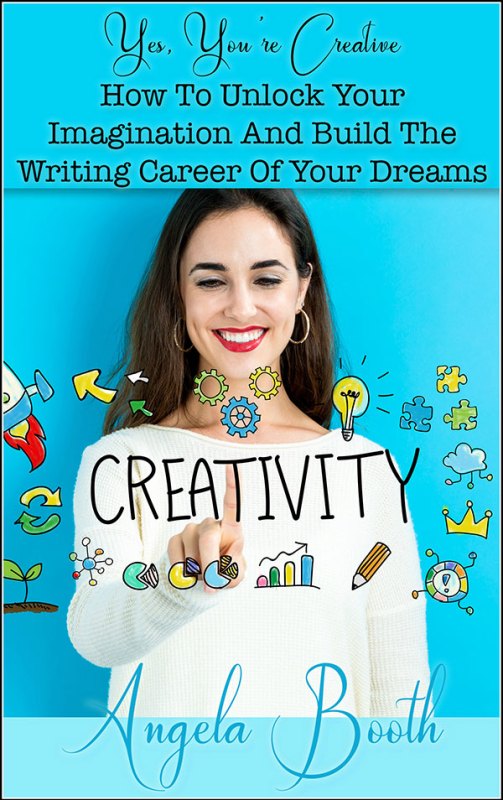
Want to become more creative?
Creativity is essential for writers.
In this book release your creativity to unlock your imagination and build the writing career of your dreams.
Creativity is essential for writers
New writer? This book will help you to avoid the missteps all writers experience when they’re starting out. You’ll build skills and habits which will ensure that you become the writer you were meant to be.
Established writer? Unleash your skills: become a true original. Who knows, perhaps you’ll write the next book which stays on the bestseller lists for years.
You ARE creative: we’ll discover how to unlock your creativity
Of course, you’re already creative, whether you believe that you are or not. You can also develop and hone those creative strategies to help you not only in your writing, but also in your daily life.
I firmly believe that not only can we develop our own creative strategies any time we need them — and it’s essential that we do. Today our world changes fast. We never know what the day will bring. Developing a creativity habit can build your confidence that no matter what happens, you can handle it.
Unlock your imagination and become more creative today.

